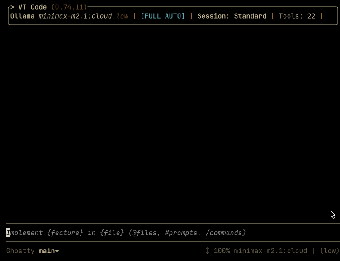
VTCode: Terminal coding agent for secure AI-driven development and localization
VTCode, created by Vinhnx, is a terminal coding agent that connects language models to local development environments for controlled automation. The tool generates, verifies, and can execute code or text edits inside a command-line workflow, using a protocol-native approach. Key feature emphasis includes a Model Context Protocol client for tool extension. Its audience is developers and AI engineers who need terminal-based assistance for refactoring, testing, and text localization with human review.
What tasks can you actually use it for?
VTCode targets practical developer workflows where an agent must propose and apply changes under oversight. It handles code refactoring, automated testing scaffolds, and AI-driven text localization by letting the model propose, verify, and execute edits inside a terminal session. Typical outcomes include batch refactors, generating test cases, and translating or adapting text assets; users accept or reject tool actions before they alter the workspace. A few task examples:
- Refactor and apply code edits
- Generate and run tests
- Localize text files and resources
How secure and auditable are the AI-driven actions?
The tool enforces a safety-first execution model with concrete controls: a sandboxed shell, strict command policies, and a human-in-the-loop approval step for tool execution. The design uses a fail-closed approach and includes adversarial coverage to limit unintended operations, which supports auditability by keeping execution gated and observable. These measures restrict what the agent can run without explicit consent and preserve a clear approval trail for command history.
Is it practical to integrate into a local development workflow?
VTCode supports more than 30 LLM providers and local inference through integrations like Ollama and llama.cpp, which makes it usable in hybrid setups. The interactive TUI provides real-time collaboration inside the terminal, and the Rust implementation reduces latency and resource overhead during processing. Cross-platform builds and install paths via Homebrew or Cargo fit typical developer environments, though initial setup requires configuring provider endpoints or local model runners.
VTCode suits developers who need auditable, terminal-first AI automation
VTCode is a practical option for developers and AI engineers who need terminal-based, auditable AI assistance; it preserves human oversight while enabling agent-led workflows. Expect a learning curve for command-line configuration and local inference setup. A useful tip: enable the opt-in WebMCP bridge only in controlled networks when you need browser-to-local terminal access, and use durable session features to recover long-running tasks after interruptions.